Assunta
Titian (1515-1518)
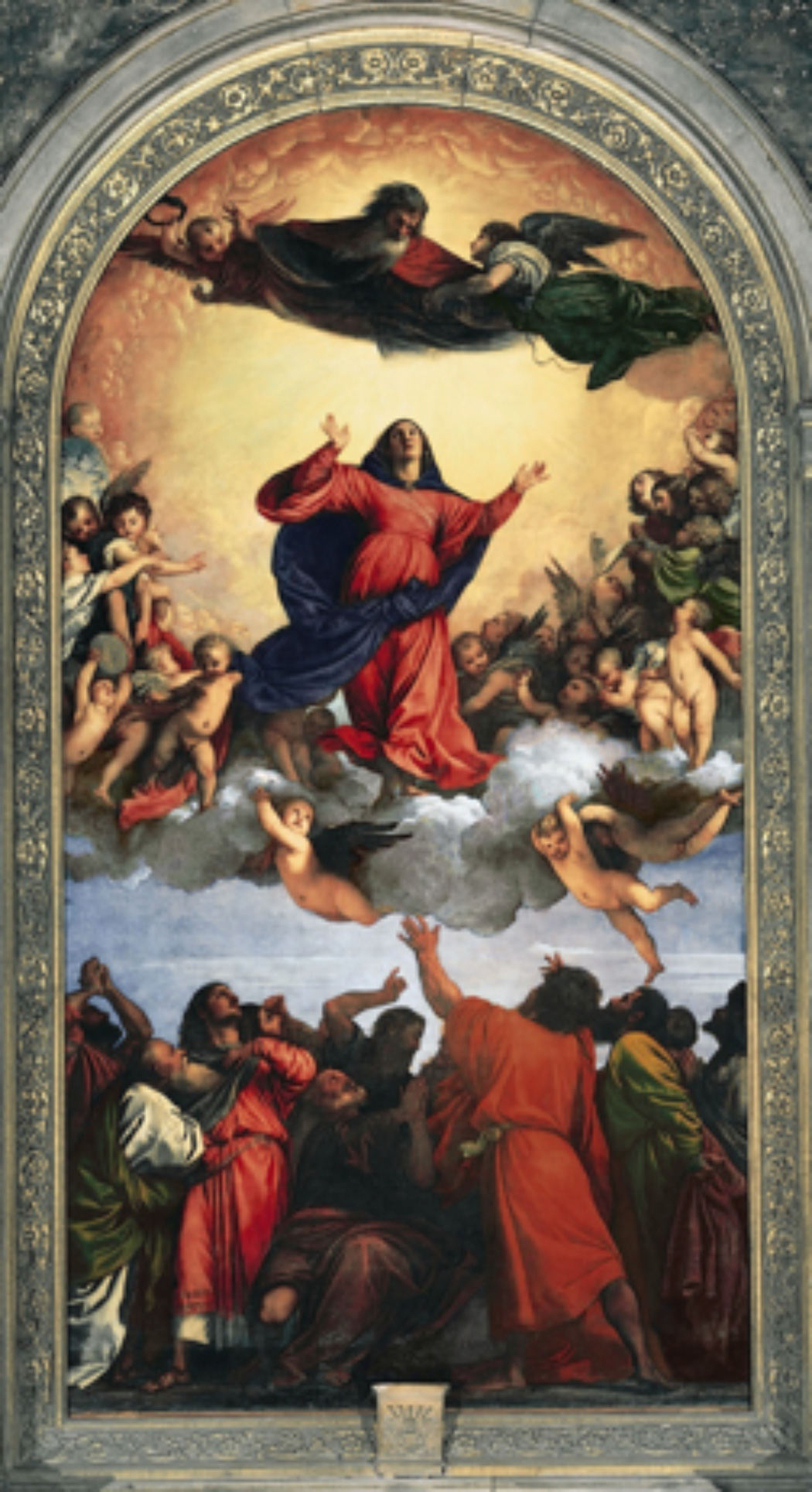
Here is a glorious riot of 500-year-old psychedelia, the largest altarpiece in Venice, that hangs above the altar in the Frari Church, which also houses a Bellini triptych, a Donatello sculpture, and the tomb of one Claudio Monteverdi. It might not be your sort of thing, but it’s worth looking more closely, because there is such beauty here: the subtle equivocation of Mary’s face as she is “assumed” into heaven for eternity, the tender compassion on God’s face as he crowns her Queen of Heaven (some of you might hear the 1610 Ave Maris Stella here), the fascination of the cherubs, the shaky drama of human experience in the lower part of the composition. It’s all so exquisitely done, human forms perfectly realised in all their activity and motion and insecurity, proportions impeccable, expressions recognisable – you might have seen St John or St Peter in the street outside. In the building, the painting’s impact is unforgettable. Even at a distance it seems to energise the entire church. Titian was a young dynamo, in Venice from the regions, and his amazing skill with both form and colour was then, and might still be, unparalleled, every figure convincing and fully alive. Look how the earthly cast is in shade, under blue sky, but as we move towards heaven, Mary is shrouded by the magical realist golden firmament that might suggest the ceiling of nearby San Marco or simply another dimension. Most of all, though, this is a meditation on the nuts and bolts of our time here: of entrances and exits, beginnings and endings, an embodiment of hope and faith, perhaps offering consolation to those who’ve lost someone, that earthly existence can finish in the joyous triumph of having lived, not the silence of unknowing. Remember how those of us left behind are nourished by their lives and their love. As Hilary Mantel says, “There are no endings. If you think so you are deceived as to their nature. They are all beginnings. Here is one.”

