The Sea at L’Estaque
Paul Cézanne (1883-85)
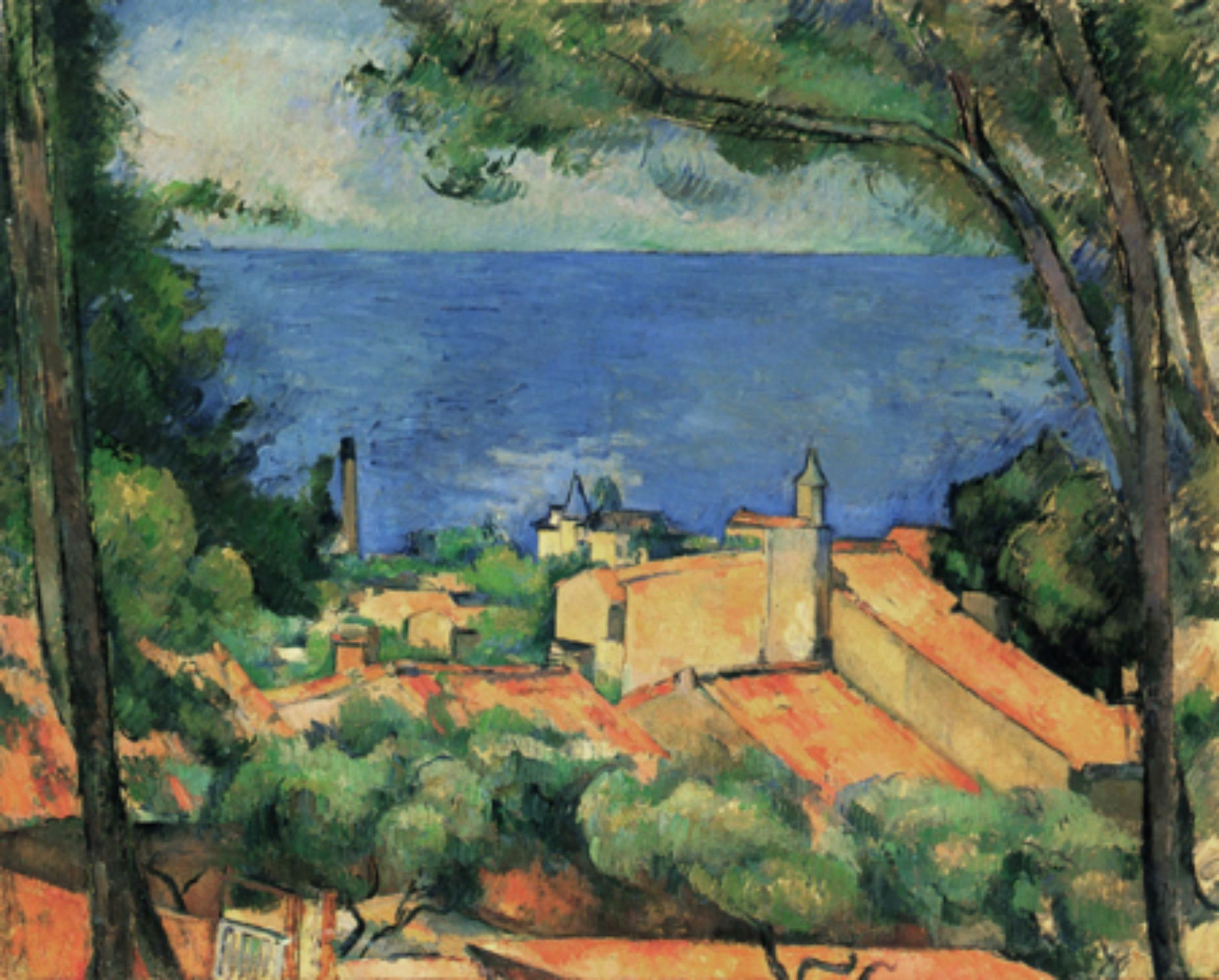
A bit of Mediterranean warmth as we descend into autumn here. Is there a more distinctive brush stroke in painting? This just couldn’t be by anyone else: emerging from Impressionism’s half-seen world, Cézanne claimed he wanted to reflect things more solid and permanent than the fleeting moments of air and light that his predecessors had explored. In a way, this is just a collection of childlike shapes that constitute the sun-bathed scene. But is also a modernist reinterpretation of the renaissance obsession with geometry: the unmistakeable Provençal stone stands resolute and softly radiant, while the artist’s groundbreaking disruption of traditional perspective means that things in the distance seem to topple out of the canvas towards us. (Picasso and Matisse both called Cézanne “the father of us all”.) L’Estaque was a place dear to him – his father was from nearby – and his paintings of it are love letters to the region’s symphony of delicately burnished colours. The features that populate the shot, too, are more than mere geometry: compare their stubborn stability to the elusive airiness of Monet’s lilies or cathedrals or even to Van Gogh’s hyperactive fields and skies. Here is something more permanent and intractable, as the artist seeks things that last. As Tokarczuk says, “…things last, and this lasting is more alive than anything else”. Imagine seeing through Cézanne’s eyes – he looks so kindly on things, and sees a world, on and beneath the surface, divided up into simple triangles and rectangles, but also infused with a tender emotional connection which is as immediately and lastingly alive as the terrain for which he seems to ache.

