Portrait of Erasmus of Rotterdam
Hans Holbein the Younger (c1524)
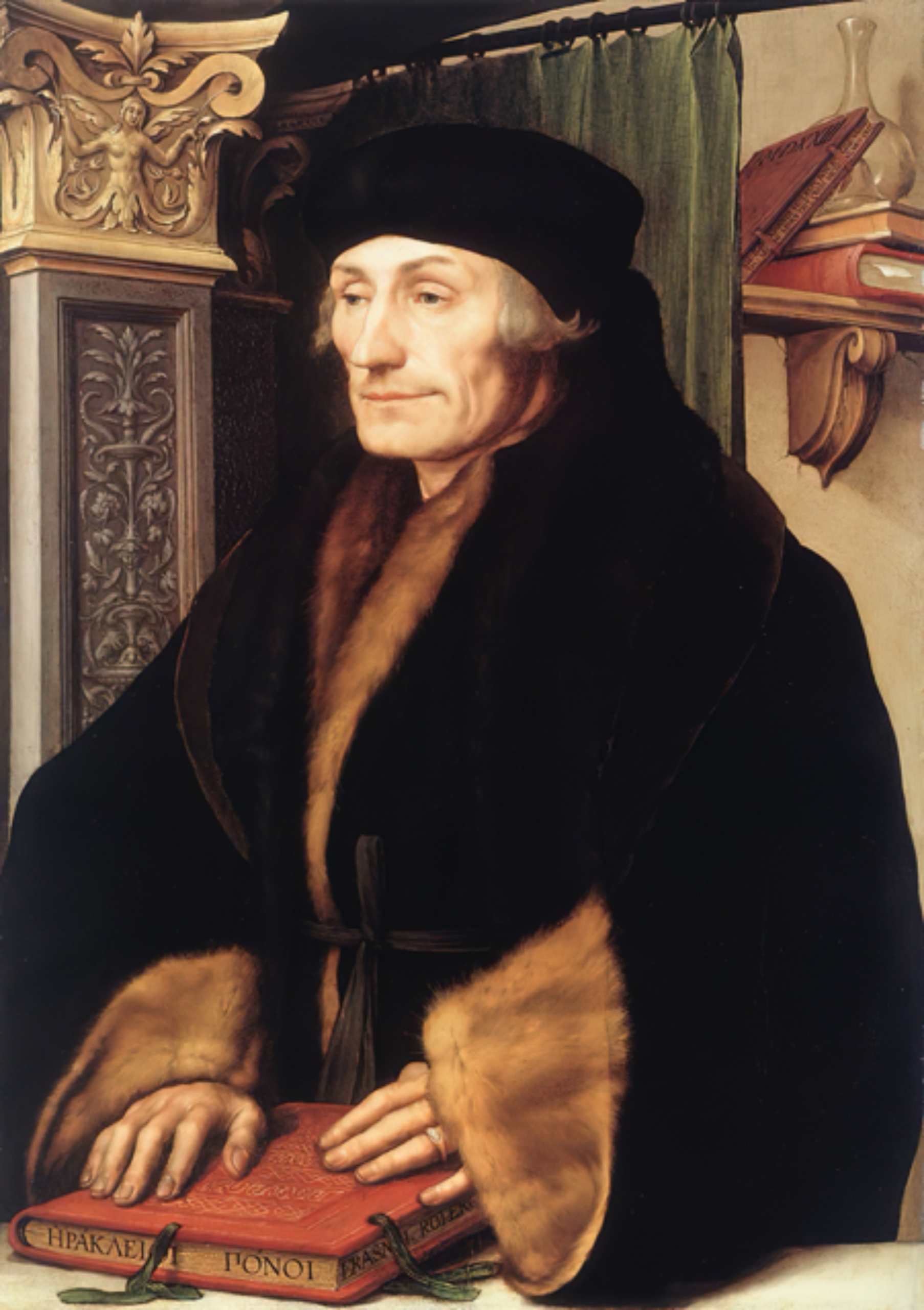
Erasmus was a Dutch catholic priest and prolific writer-philosopher whose advocacy for elusive human concord and informed dialogue have secured him a place in the historical pantheon of Good Guys. This portrait by the comparably prolific and beloved Holbein is, for some, the beginning of modern portraiture. A bit of a stretch perhaps, but, seen in the National Gallery, you might recognise him, might have seen him just outside. A portraitist’s job is not merely to produce a physical likeness but somehow to capture a soul: to paint all you can see in him and everything you can’t. (You might even say all that’s present, as well as his past and his future.) In this case, that means a face carved by experience and weighed down by an acceptance of things resistant to change and reason. The nose is sharply lifelike, the mouth keeping tactful counsel, and the eyes are caught in a half-smile that looks to me somewhere between resignation, wisdom, and absent-minded distance, the mind perhaps on higher things. The clothes are furrly luxurious – he’s a cool cat – and lastly we can take a look at the painter’s other resource: objects we can’t help but notice. His hand rests on a book that says “the Herculean Labours of Erasmus of Rotterdam” (humblebrag much), but he’s not all work: check out the empty wine vessel on the shelf behind the curtain. Holbein then can’t resist inserting something personal – on the spine of the book leaning on the carafe, he writes “this is by Hans Holbein, whom it is easier to denigrate than to emulate”. All this constitutes a radically enriching experience for the viewer. A portrait of tremendous beauty and verisimilitude, that reflects not only a quiet plea for respect, and a man of deep wisdom, humanity, and compassion, but also a hymn in glorious, restrained colour to those (and other) eternal virtues, which – like painting itself – “speak what no words can utter”.

