Little Owl
Albrecht Dürer (1508)
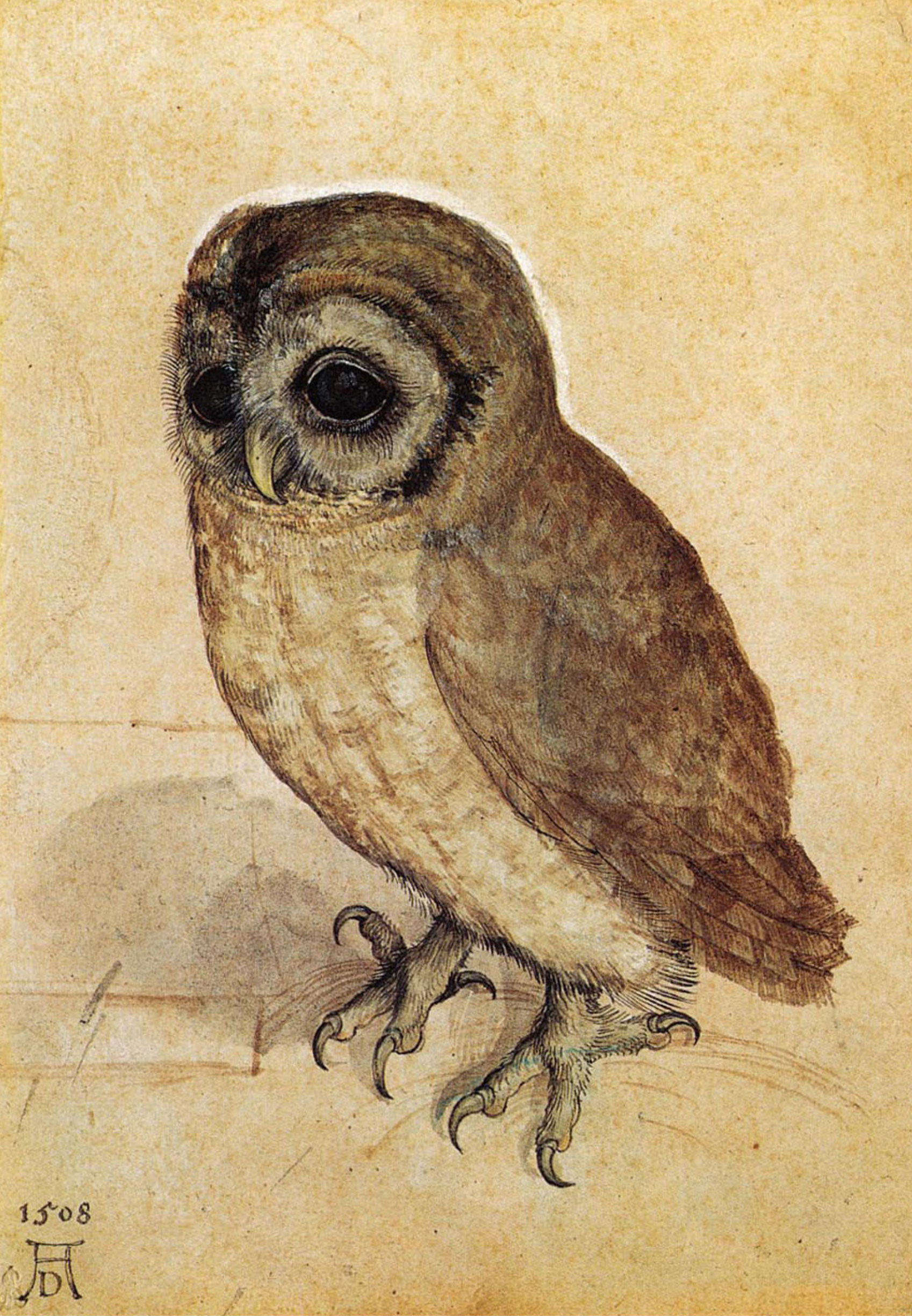
Dürer lived and died in Nuremberg, but travelled widely, meeting Bellini and Leonardo to the south and Erasmus and van Eyck’s Arnolfini portrait in the north, and assimilating elements of both schools into his astonishingly broad body of work. It’s wild to imagine what music (and sounds) he must have been surrounded by. He was lavishly gifted, and his infinite attention to, and love for, the natural world is at once bracingly modern and poignantly eternal. This little guy is a tenderly melancholic example of Dürer’s love for his subjects. Owls are prominent in western art (from Cranach to Picasso), usually connoting either preternatural wisdom and vigilance or mortal darkness, but this one has neither. Instead, separated from its habitat, he seems terribly vulnerable; viewed from slightly above, eyes abysses of dark sadness, talons holding on for dear life, plumage bedraggled. The background, too, is stubbornly neutral. We’re asked instead to ponder the essence of things – what the owl is rather than what it does – and to collapse the distance between ourselves and the subject. (Disney animals with human features show similar anthropomorphic qualities, centuries later.) In the hands of this extraordinary artist, a seemingly innocuous picture of a humble creature becomes a hymn to the eternal virtues of attention, truth, and empathy, and offers something not only lyrically melancholic but also bracingly, inspiringly universal.

