Eternity’s Gate
Vincent Van Gogh (1890)
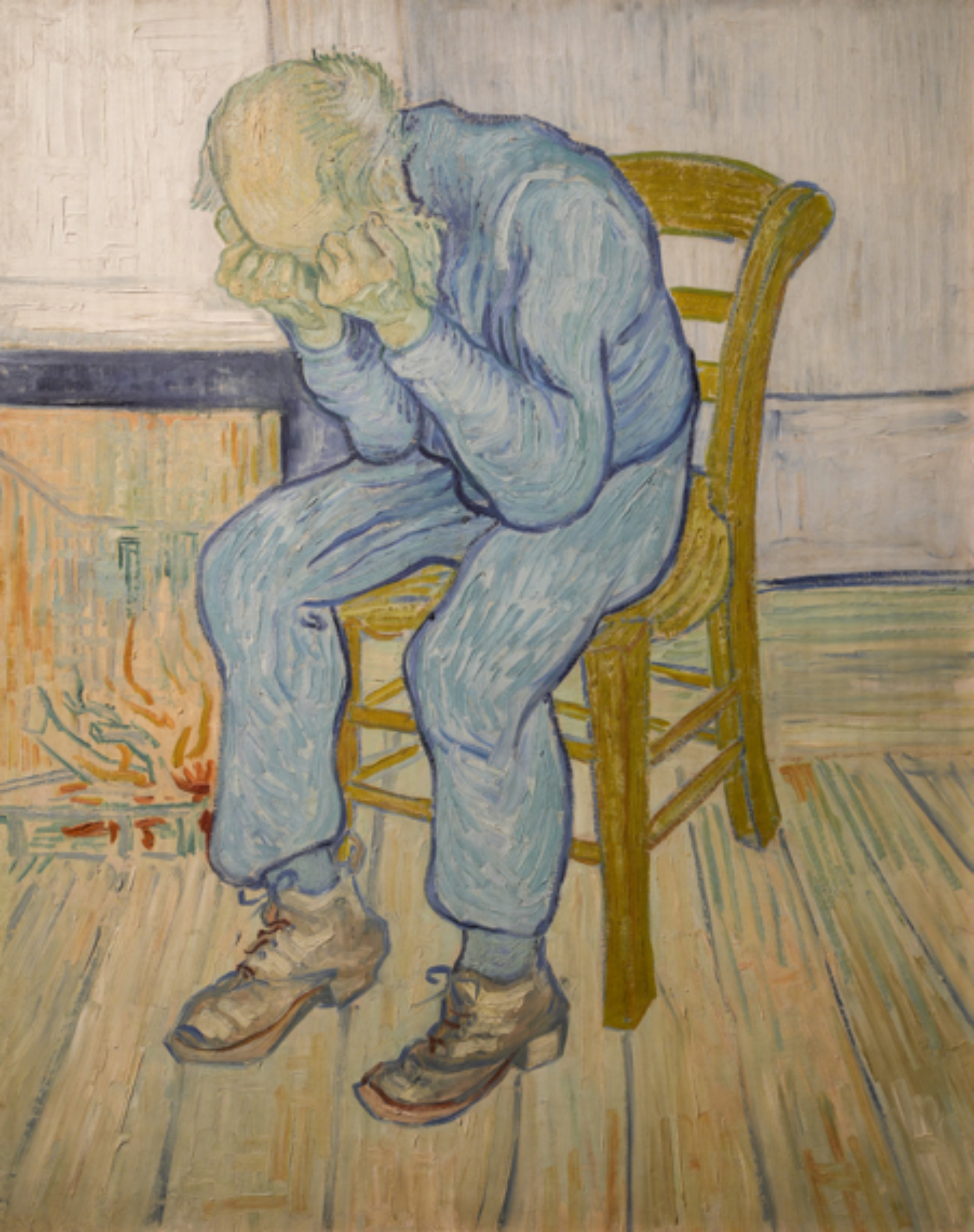
Painted in the creatively prolific but desperately traumatic last year of his life, this is a picture that can have a remarkable emotional impact in the flesh, partly I think because of its instantly recognisable universality. An old man, seated in an empty room, clenches his hands to his face. He’s dressed in blue – for Van Gogh and others the colour of grief and tragedy – and has only a fire for company. Is the fire the sign of a life still burning or a premonition of death? You decide. Our eyes are completely drawn to the protagonist, whether by the lines on the floor, the washed out colouring of his background, or the way he occupies such a central position. This is a theme of this artist’s work, putting the weak, the poor, the suffering (often including himself) at the tender heart of his work. The man is hollowed out by a combination of grief, rage, fear, injustice, and more that we can’t know. Despite his age, we might all recognise such moments of utter defeat from our own lives. The old man shields his eyes, a retreat from the world that chimes with our idea of “late” (only 37!) Van Gogh as he spirals into oblivion, pursued by his own vicious demons. But there’s more: the title speaks of something beyond the earthly realm (“I have faith that we are not just something for the worms” as Vincent wrote to his brother, Theo). So much creativity – think too of Mahler’s symphonies composed around the same time, or Chekhov’s ‘Misery’ (1886) – carves improbable consolation or even joy from sadness, and heralds the nourishing, even inspirational value of our pain. This is just another example: in the unlikeliest place, Van Gogh reveals the heart of faith to us, and an embodiment of George Eliot’s rewarding, hope-full insight: “Suffering can be likened to a baptism – the passing over the threshold of pain and grief and anguish to claim a new state of being.” January is nearly over!

