The Descent from the Cross
Rembrandt (1634)
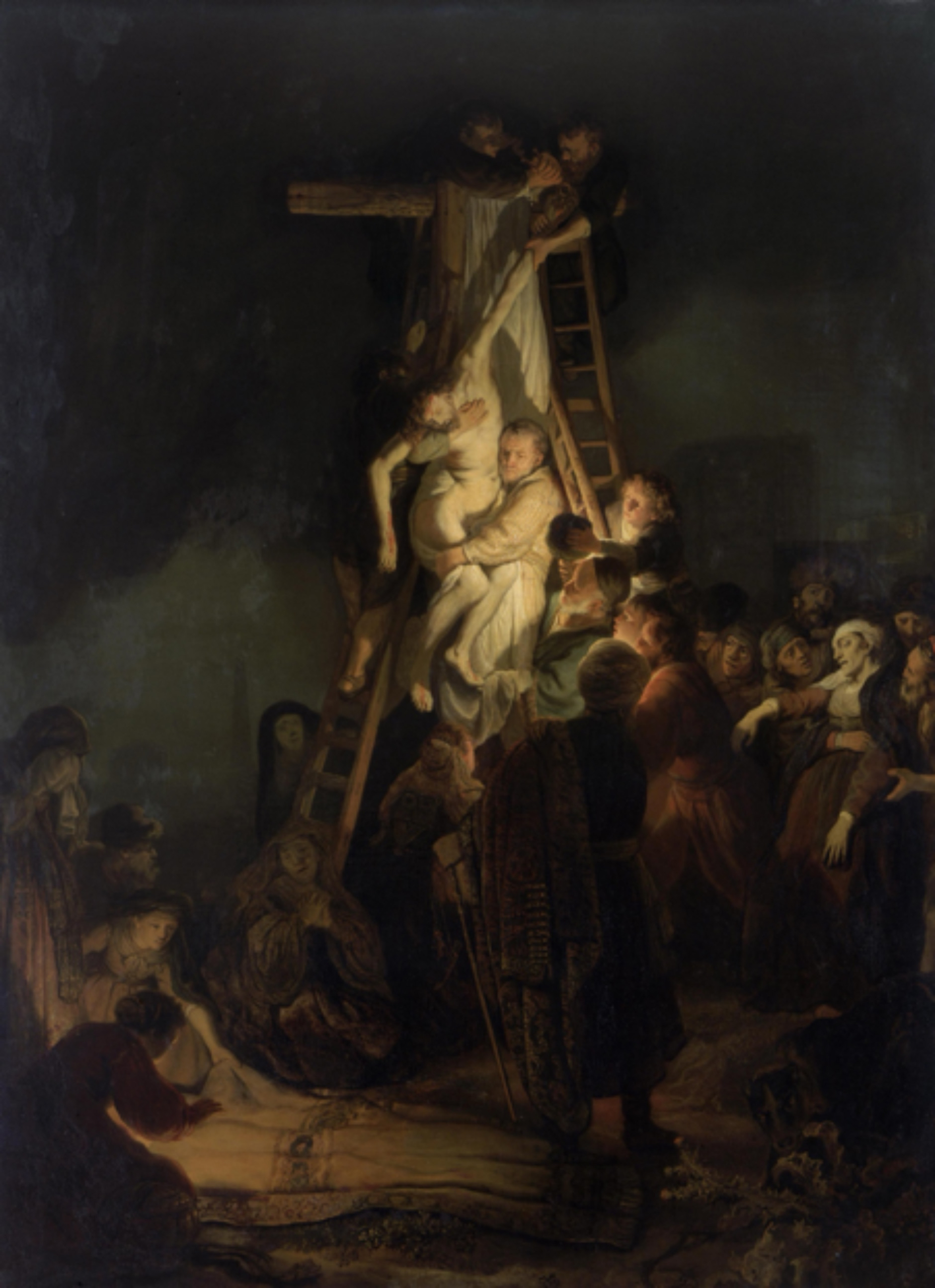
Van Gogh said that what made Rembrandt’s work eternal was “his sympathy for humankind”, and this picture radiates breathtakingly tender compassion. Look at the shape of Christ, limp and laden with death, and Mary, whose poleaxing grief looks like another kind of death. The tense, taciturn men are contrasted with the more open grieving of the women (in both Bach Passions it’s interesting that at the end, the women are named and they take delicate care of Jesus’ body). But this is about light, too: how it defines time past (as it was in the beginning), present (is now), and future (and ever shall be): what has happened to Christ, what is happening (to the grieving mother and crowd), and what will happen, with a burial cloak laid out like a cradle. By framing Christ as the light, with those who grieve for him and mourn him bathed in the light of sympathy and grace, he reminds us that this is a story about redemption and love.

