Self-portrait
Titian (c1560)
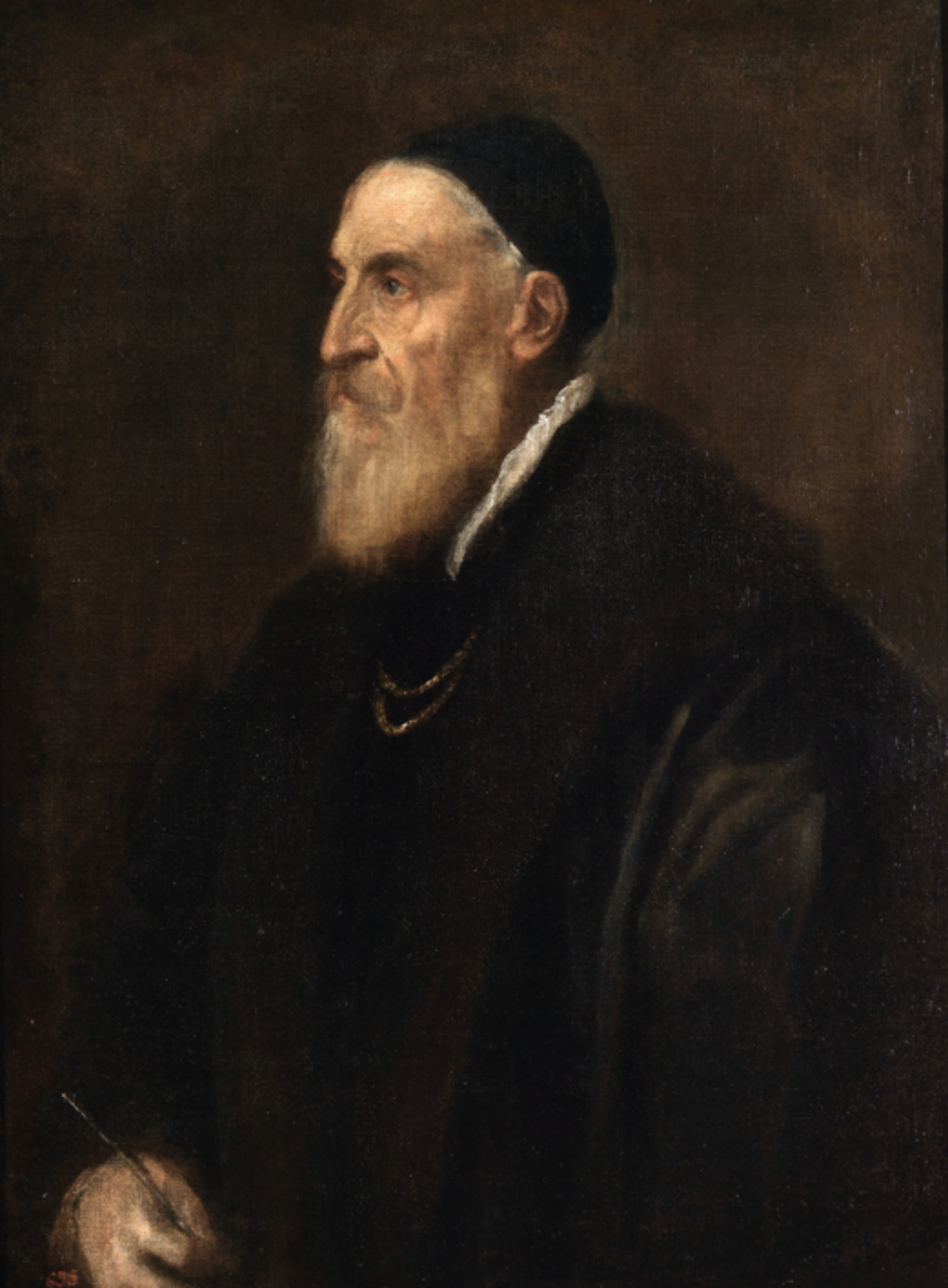
One of two surviving self-reflections, this later one shows an older, wiser, but far less self-assured artist. Things we notice: the colour scheme is a long way from the vibrant psychedelia of e.g. the Assunta (1518), its subdued browns and blacks reflecting a sombre view of a life nearing its close. The clothes are expensively dapper and restrained – so vividly painted – and the chain shows that he is a member of the Order of the Golden Spur (me neither). This is one of the first examples in western art of a painter revealing his profession on canvas, with the brush in his right hand all the more visible against the dark clothes. Velázquez and Goya (amongst many others) will follow his lead here. He may be the strong, silent type – mouth clamped shut in discretion or frustration – but we can see he’s also old, weary, lost to us and to himself somehow, his eyes watery, distant, and carrying tremendous sadness. Even the angle he’s at makes examination tricky – he’d have needed mirrors and tricks just to make this. In the greatest cases, a self-portrait is a chance to place virtuosic artistry alongside the sharpest human insight. This is art as aspiration: we might all aim for such unflinching self-scrutiny. (GKC said the self was “more distant than any star”.) Who can marry into one thing a mastery of their craft with the most profound human curiosity and engagement? The Chinese say that a great artist requires three things: the mind, the eye, and the heart. Don’t try it without this last: the sympathy to see, reflect, and express something both personal and universal. Call it mercy. Titian shows us himself, his mileage, and beautiful insight into the ticking of time and its toll on all of us.

