The Jewish Bride
Rembrandt (1665-1669)
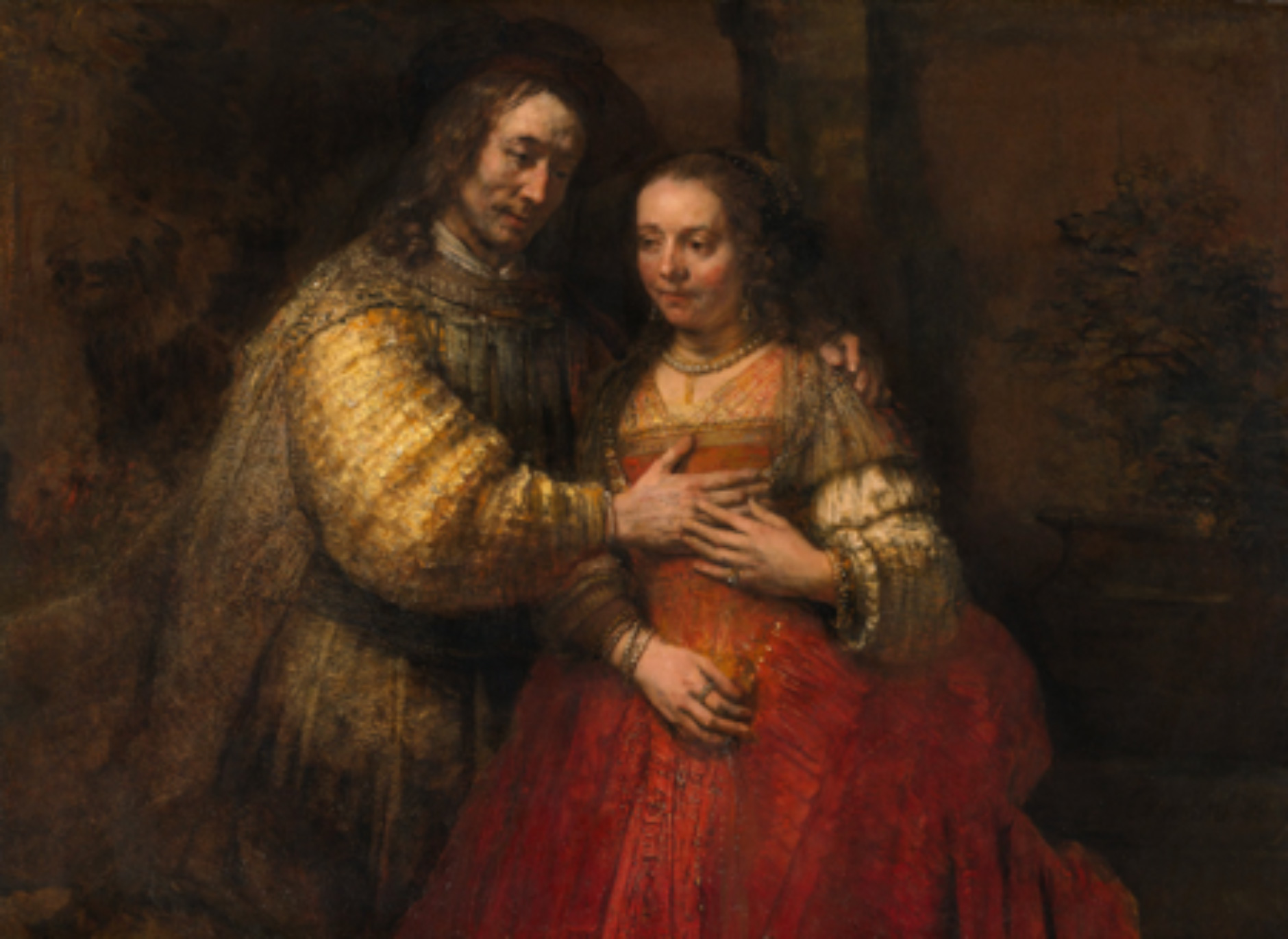
This late, great masterpiece has a misleading name: it’s no longer thought to portray a father and daughter on her wedding day, but a real couple caught in a private moment of tenderness. There’s lavish detail: virtuoso slashes of red paint on her skirt, tiny dabs of brilliance on his sleeve, or the vivid glint of realism in her jewellery – we’re in the presence of money and privilege. It’s Rembrandt, though, so the outer costume is mostly a way into something interior, essential. And I mean essential, because here – simply – is love. The artist looks through the surface and directly into the heart of things, where outer splendour is mirrored by emotional wealth. Look at the play of the intertwined hands – his on her heart, hers on his hand – and how that might resonate through a life shared. Look how his left hand shields and supports her, what untold history might be carried in that small, unconscious gesture. And their faces, hewn by time and experience: they are at once loving, careworn, considerate, ageing, concerned, tired, preoccupied (the gentle furrow of her brow so perceptive and sympathetic). No doubt you’ll see other emotions and stories here, and perhaps recognise your own (and yourself) too. Acts of complicity, compassion, mutual attention run through the painting like veins in a body – miles of shared experience that connect the couple with each other, as well as beyond themselves, to us, now. Things don’t last: love and life will wither and fade. Paint is not the real thing either, but its alchemy redeems light lost to time, and this pic is one of the great monuments to the simple and infinitely complex fact of love between two people. (Is there anything simultaneously so everyday and utterly transformative? Makes it a good visual subject.) It’s also an exemplar of love embodied for the viewer: a guide to quiet, enduring, whole-hearted love, that “makes one of two, and heals the wound of human nature” (Plato, channeling the Spice Girls), here given eternal memory in the work of a master of perspective, psychology, and empathy.

