Adoration of the Shepherds
Bartolomé Esteban Murillo (c1665)
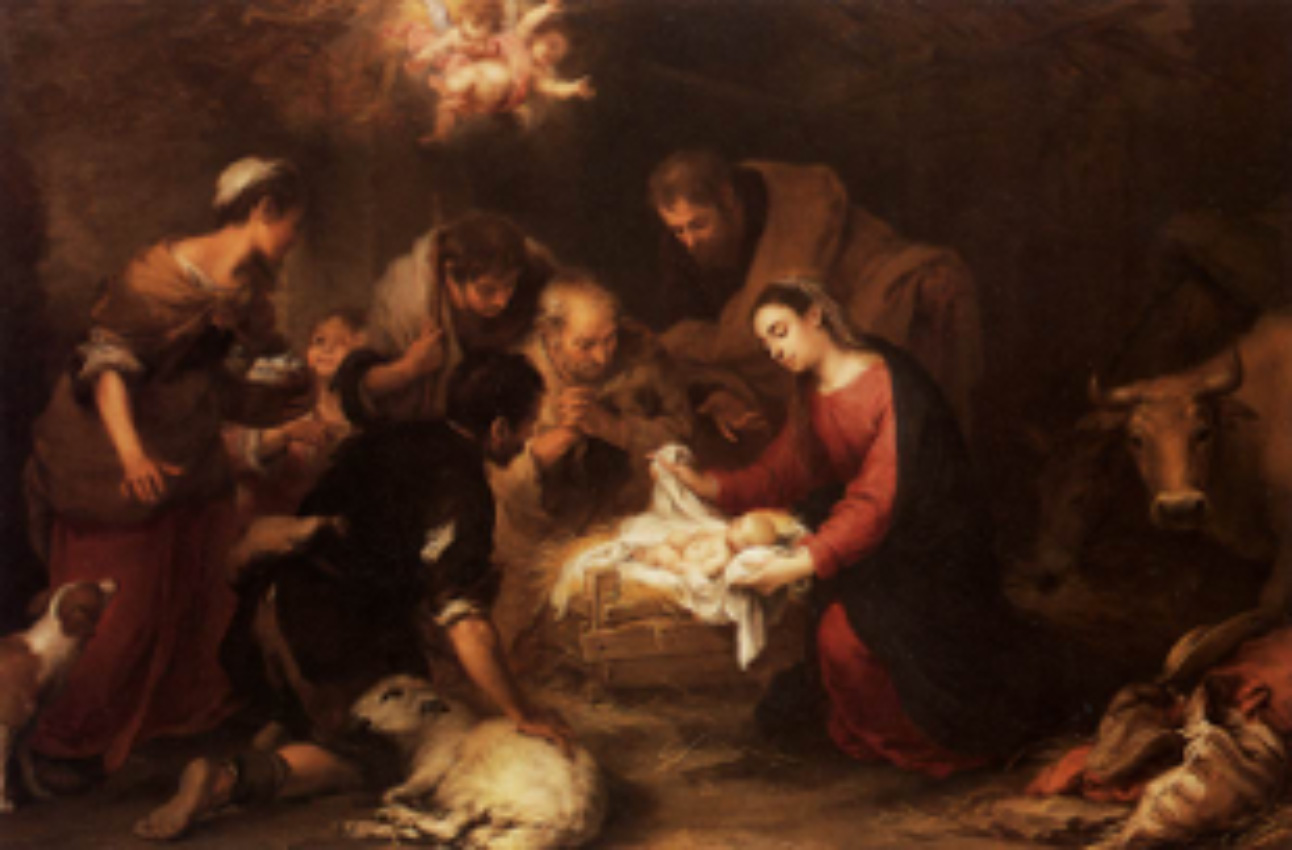
Look at this lovely lot, the ordered chaos of young and old, human and animal, divine and earthy. On the edges, looking in, we have an ass (behave) an attentive dog, and a gorgeously lifelike lamb who presages the sacrifice to come. A tale for all creation. Look how the air becomes more sacred, even filled with grace, as we approach the centre of the canvas, and take in the amazing central tableau. The young shepherd leans in on his crook – another visual prophesy (good name for a band) – and the old man clasps his hands in prayer or ecstasy. The tear in Joseph’s garment recalls Caravaggio’s Emmaus meal. All these beings are completely alive to the moment, bathed in the heavenly light of a baby who embodies the paradox of innocent infancy and kingly majesty. Then there’s Mary, tender, attentive, utterly besotted: at once like and unlike any other mother. It’s no coincidence that the language we use for painting – light, perspective, illumination, harmony – is also what the nativity story ceaselessly draws on. It’s how we perceive things beyond (in Twain’s words) “the mere clothes and buttons” of the world. And how we need to. In one simple picture, a world of messages and wonders collides: the inspirational value of humility, the precious alignment of earth and heaven, and – always – the infiniteness of love. Here’s a picture that aims to open the eyes of the blind, reminding us to ever be open to the powerful possibility of changing our minds and our hearts. George Eliot knew all about this: “It is one of the secrets in that change of mental poise which has been fitly named conversion, that to many among us neither heaven nor earth has any revelation till some personality touches theirs with a peculiar influence, subduing them into receptiveness”.

