Leda and the Swan
Cy Twombly (1962)
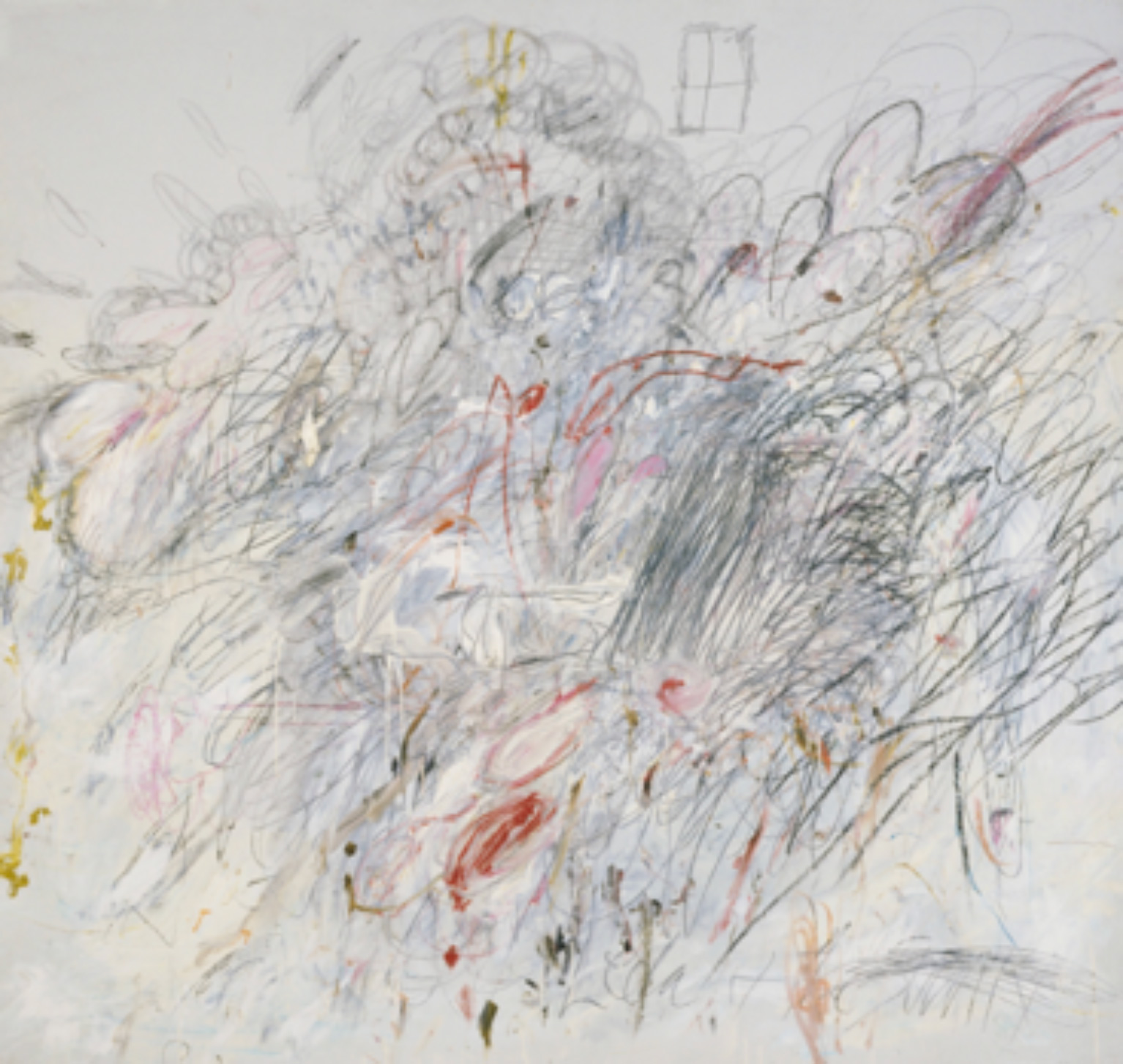
Twombly moved to Rome from the US in 1957. We can see this influence in at least two ways: the subject matter is from classical antiquity (the violation of Leda by Jupiter who had taken the form of a swan to seduce her), and the crude scratches and febrile energy of the markings seem like a tribute to the Classical wall paintings that he’d have seen frequently. Pencil, brush strokes (“alright Jacko?”), and even paint straight from the tube sprawl across the canvas: this isn’t so much a representation of the act, but a vividly, harrowingly embodied attempt at reliving it. The expressionist markings intensify towards the middle of the canvas with the accelerating violence of an assault: we can make out a crude, graffiti-like phallus, and, top right, a series of hearts seems to ascend as if fleeing the scene, broken. Twombly knows his art history textbook well enough to scribble all over it: Leonardo, Michelangelo, even Cézanne, all painted this subject and it’s worth comparing their soaring lyricism and naively idealised beauty with this chaos of trauma and noise, the visual equivalent of a shrieking orchestral cacophony. A feature of his work is his “automatic” way of painting: he’d sit and prepare himself – psych himself up, even – and then try at speed to make work that was full of dynamic energy and unfiltered by conscious thought. This explains why and how it prioritises visceral immediacy over artful sophistication. The picture shows, amongst other things, the conception of Helen of Troy – the face that launched a thousand ships, and the Trojan war – and, in spite of the immediacy of its impact and the speed of its creation, it points us towards an eternal truth: no act of horror – the victim here “So mastered by the brute blood of the air” as Yeats has it – comes without a mushroom of far-reaching, tragic consequences.

