Guernica
Picasso (1938)
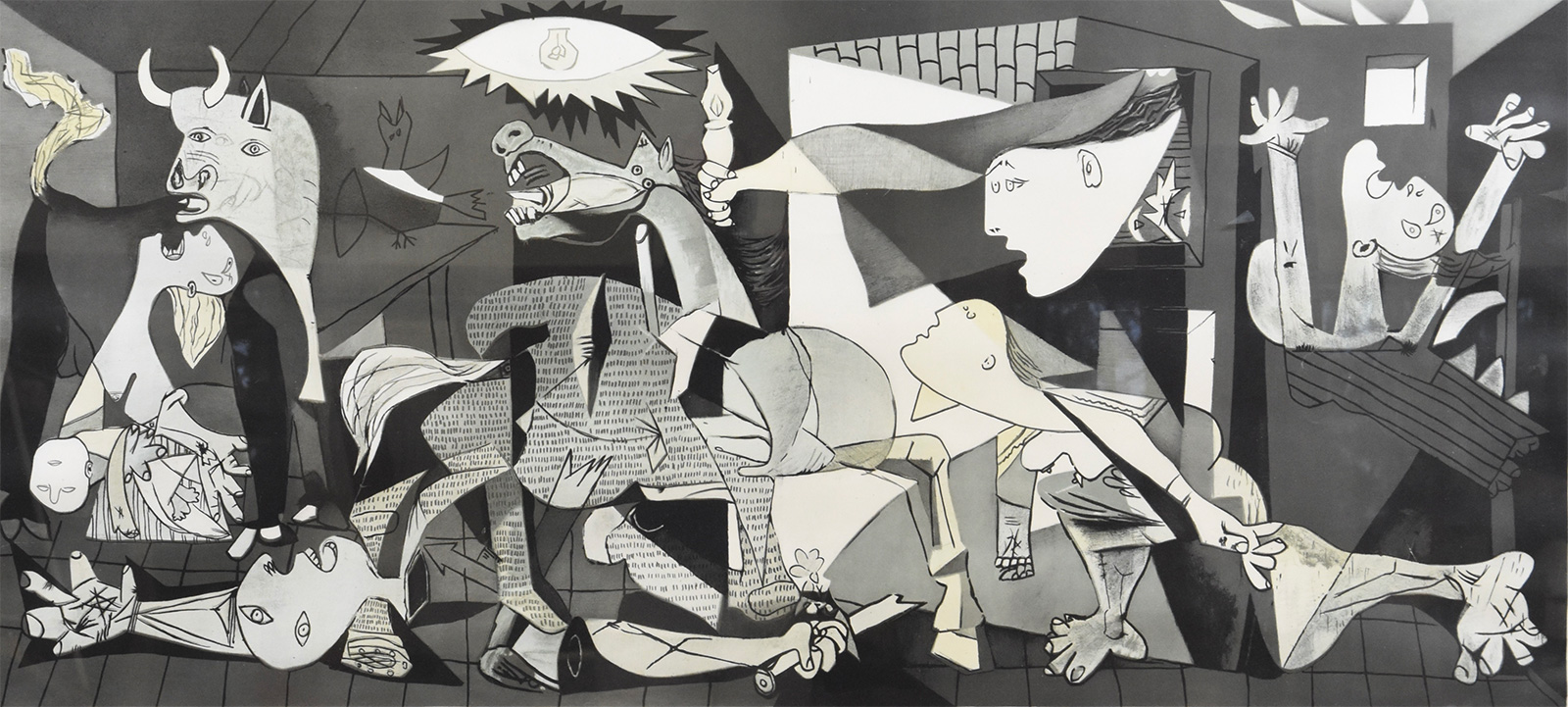
This is an outraged response to the senseless and brutal bombing of the sacred Basque town of Gernika by Franco’s forces in the Spanish Civil War. A huge mural-type work, it’s difficult, even harrowing, to look at: a shriek of rage and defiance against the total war he saw throughout Europe (he had moved away from Spain earlier that decade). Everywhere we look is destruction, death and disintegration, and even now it looks bracingly modern. But he also knew his history: look at the woman cradling the lifeless child on the left – a cubist Pietá. Resolutely grey, it’s a world emptied of expression and colour – and life. The broken man at bottom left reminds us of the sacrifice of Caravaggio’s St. John. The monochrome, un-beautiful light comes both from a window (top right) and an internal lamp: the scene is neither inside nor outside but ‘everywhere’. And look at that burning window – here is a clear reminder of Las Meninas. Picasso was obsessed with Velázquez, and the proportions of Guernica are said to be modelled on it. Most important, perhaps, is its political message for peace, and the way that it somehow keeps eloquently speaking up. A reproduction is hung in the hallway of the UN, but when Colin Powell effectively declared war on Iraq from the same hallway in 2003, they hung a cover over it for fear of mixed messages.

