The Return of the Prodigal Son
Rembrandt (1669)
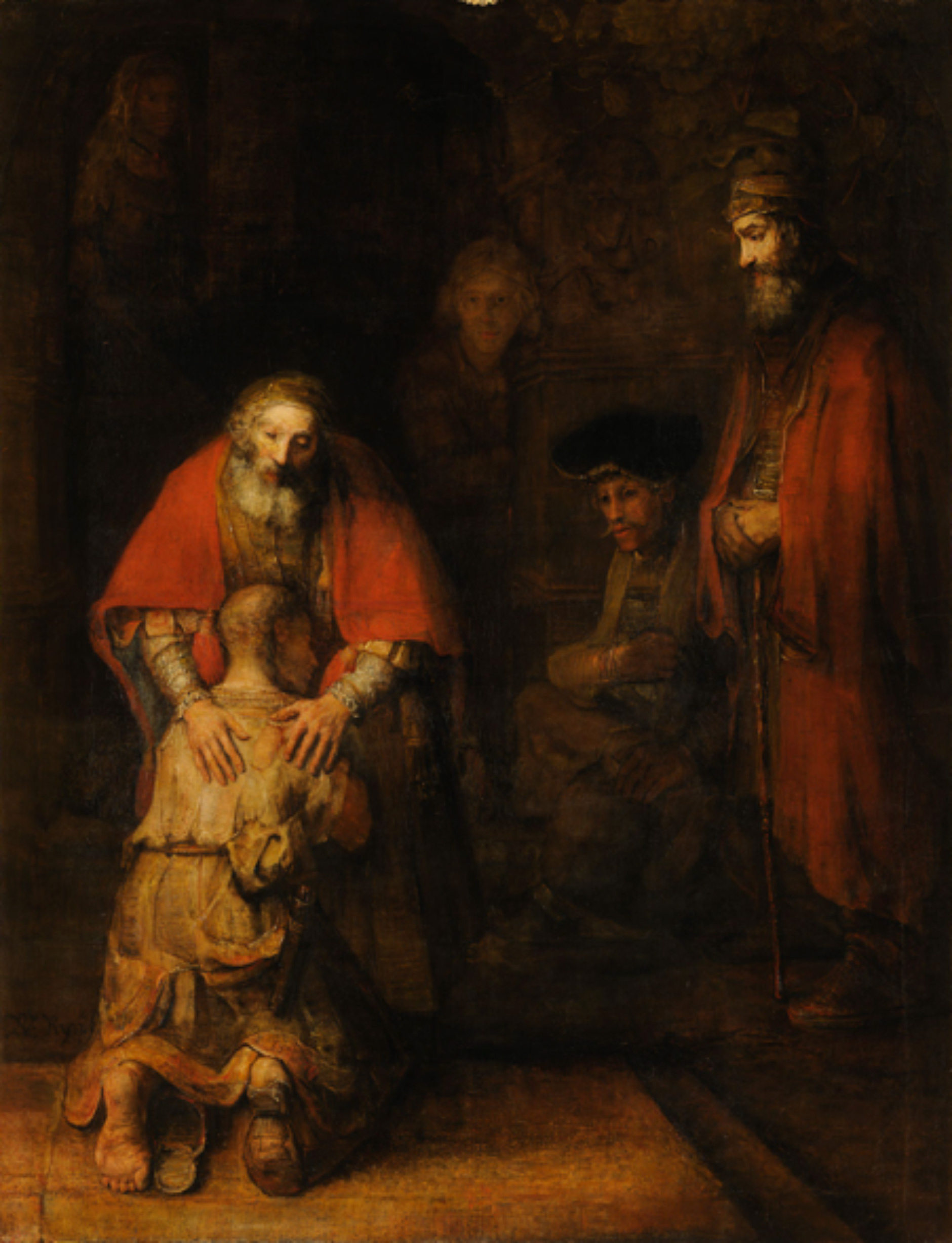
Such a lot of grief and loss around at the moment, so it’s worth examining this, where biblical allegory meets psychological insight, and what it might tell us about eternal, redemptive things: hope, forgiveness, love. The tale is well-known: one son goes off to make his fortune or seek the world, and comes back repentant and destitute. His brother has remained at home and dispensed his filial duties unquestioningly. But when the wanderer returns the red carpet is laid out and the famous fatted calf thrown on the bbq. How many of us know the burning frustration of loyalty unrecognised, appreciation shown to the undeserving? Here, the father inclines to the wayward child and disregards the other son, at the right, hands held as if restraining himself saying or doing something he might regret. In the half-dark behind, we see a cast of characters clear enough to be fully human, enigmatic enough to to be us, placed to contemplate the event from other angles. But, front and left as we look, is the heart of the matter. The errant son’s clothes wear the expression we can’t fully see on his face: bedraggled, exhausted, remorseful. The father’s hands (Rembrandt is good at everything but omg the hands) are asymmetrical – artistic oversight or insight into the infinite complexities of parenthood? You decide, but look at the boundless sympathy in him, his own clothes just as telling: noble, ageing, careworn. See how the son melts into his father’s heart, the years of closeness and estrangement rushing into the present. Let’s look, too, at colour and light. Unlike his great contemporary Vermeer, Rembrandt isn’t interested in enigma and secrecy; he seems to want to tell us the whole story. Witness the pinks and yellows and greys of human skin, his attention to emotional detail: the brother’s furrowed brow, the father’s head and body twisting tenderly in different directions, the heartbreak on the prodigal son’s face. All done with the subtlest touches of colour. And light: where is the source? It might be divine light, the brightest regions of human psychology illuminated by action: repentance and forgiveness, sorrow and compassion, and, most of all, measureless love. For the artist, who suffered the loss of four children, to paint this so near the end of his life, offers us something extraordinarily moving: a connection to the deepest reaches of the human heart, a faith in redemption, and a reminder – against constantly mounting evidence – of just how beautiful the human world can be.

