Little Street
Johannes Vermeer (1658)
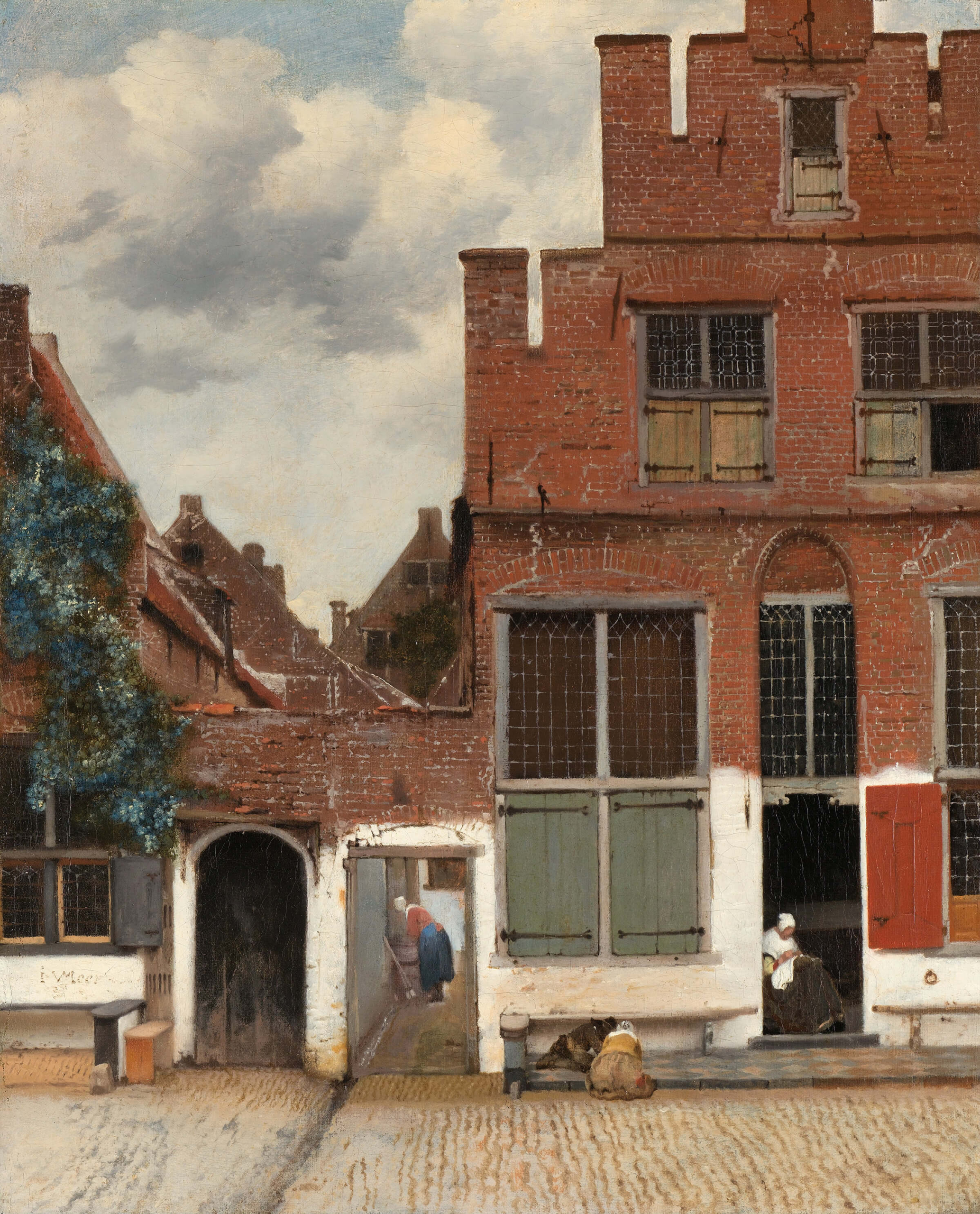
This looks like a typical street scene in Delft: children playing and domestic routine around buildings remarkable only for their ordinariness. But there’s more: as the clouds suffocate the town, this master of illumination gives the scene a stubbornly flat light, like the dull ache of melancholy. The actual view is almost certainly an imagined amalgam of various actual Delft streets, rather than a true likeness. And, most tellingly, everywhere we look, we see the mark of time: the wear and tear of the house’s fragile fabric, the play of the young alongside the routine work of the old, the blossoming vine on the left. Tennessee Williams said time was “the longest distance between two places”. From 17th century Holland, Vermeer captures something starkly normal and – by making time the unseen, omnipresent protagonist of the scene – turns it into eternal truth.

