Number 14
Mark Rothko (1960)
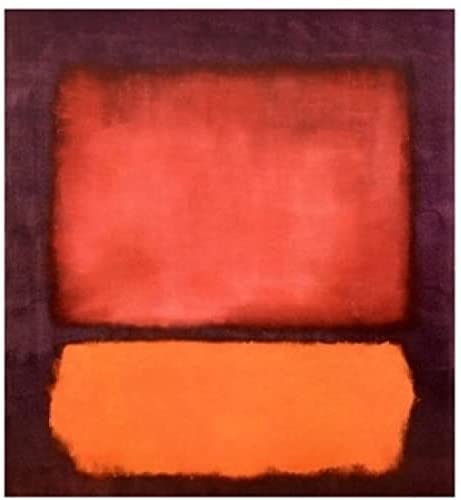
How to explain the appeal of Mark Rothko, who, like a toilet thief, offer us nothing to go on? “I’m not an abstractionist. I paint profound emotion: tragedy, love…” He’s dealing in big, real – if invisible – things. But how does a painter do that? First is the material, pure physicality, in the flesh, of these ‘colour fields’: they’re big and imposing, overwhelming even. Rothko wanted the viewer’s first experience of them to be close to the canvas, so as to feel ‘inside’ them. Art is traditionally how we decorate space (and music how we adorn time) but here is something that demands time. For me this combination is radiant, warm, full of tender sorrow, but you’ll see different things. A Facebook reproduction is not the thing, obvs, but in reality these colours can quickly begin to vibrate, shimmer, shudder, separate, blend, engulf you. And then, questions: how do you feel? What does this colour combination say to you; what does it do to your neural pathways? When all recognisable physical trace of the world is revoked (also the stubbornly unhelpful name) where do our minds go? If Klimt is right, and “art is a line around your thoughts”, Rothko aims to produce work that has at its heart the completely elusive, non/pre/super-verbal, nature of our minds (how close can our words ever be to our truest thoughts?). This is work that simultaneously invites us in and resists definition or articulation, showing nothing but telling everything. To experience it (“seeing” is maybe too poor a word) is to meet yourself, both on the way into and back out of the work. The apparent weakness of these works – that they don’t show us the world – is actually its genius: it doesn’t show us the face of a beloved or the poetry of a landscape, but it does go some distance to showing us the nature of things, not least how we listen to the gaps of our experience, how we react to mystery, the value of asking questions of ourselves. Maybe the appeal lies in the fact that people often prefer questions to answers, silence to noise, doubt to certainty, and space, not instruction, to think for themselves. Maybe Rothko said it best, flying the flag for a whole way of seeing: “A painting is not a picture of an experience, but is the experience.”

